

What if the efficiency percentage on your solar panel’s datasheet isn’t the most accurate predictor of your actual savings? While many homeowners in Plymouth focus on technical specifications, the real-world solar pv performance of your system depends far more on how it handles our unique coastal climate and your specific household consumption patterns.
We understand that navigating the jargon of kWp versus kWh can feel overwhelming, especially when you are trying to ensure your investment is future-proofed against rising energy costs. It’s natural to feel concerned about how salt air might affect system degradation or whether the July 2026 energy price cap of 26.11p per kWh makes your return on investment timeline shift. You deserve a clear path to energy independence that avoids technical confusion.
This guide is designed to provide clarity on how to optimise your energy yield and achieve the high self-consumption rates needed to lower your bills. We will examine the practical factors that dictate long-term reliability in Devon and Cornwall, ensuring you have the confidence to manage your system as a professional, end-to-end energy solution.
Key Takeaways
- Distinguish between laboratory efficiency and real-world energy yield to accurately forecast your annual savings and household energy output.
- Explore why Plymouth’s specific irradiance levels and coastal conditions require a tailored approach to roof orientation and system pitch.
- Master the techniques needed to monitor and maintain peak solar pv performance, ensuring you identify and resolve output drops before they impact your bills.
- Evaluate the role of battery storage in maximising self-consumption, allowing you to use more of the energy you generate whilst reducing reliance on the grid.
- Learn how professional, end-to-end maintenance support can mitigate annual degradation and secure your return on investment for decades to come.
Understanding Solar PV Performance: Efficiency vs. Energy Yield
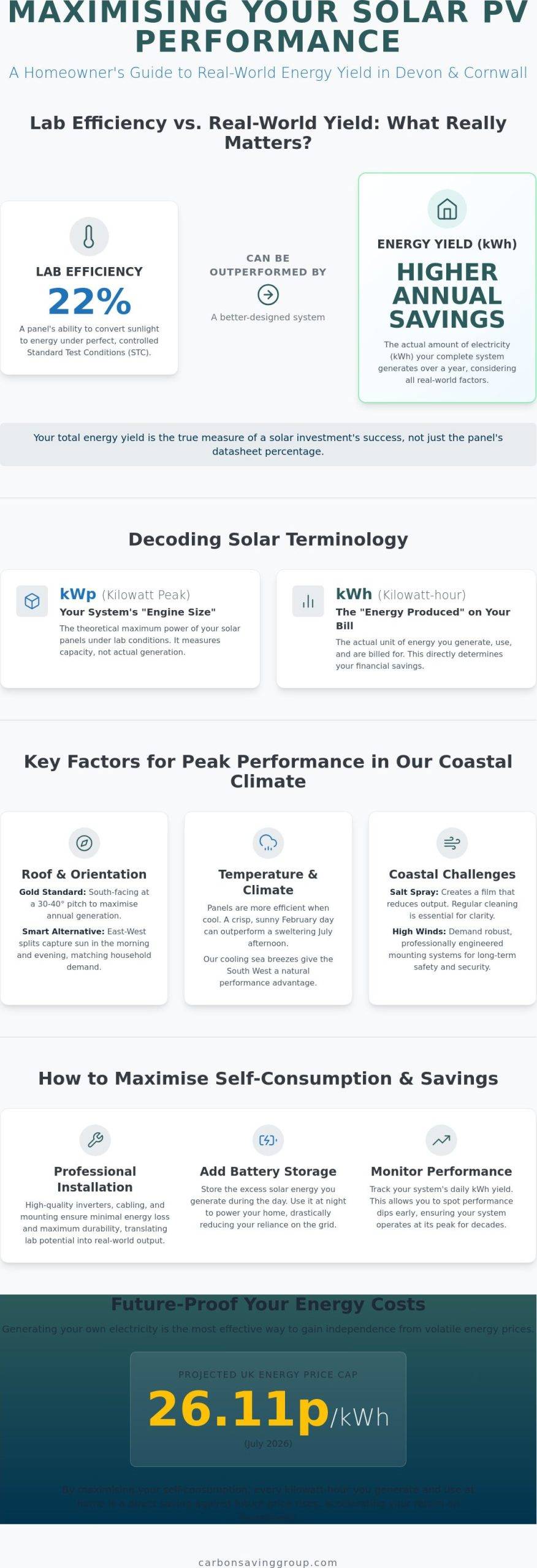
When homeowners research solar, they often focus on the efficiency percentage listed on a panel’s datasheet. Solar PV Efficiency is simply the percentage of sunlight that a panel converts into DC electricity under strictly controlled laboratory conditions. While a higher percentage is desirable, it doesn’t tell the whole story of your solar pv performance. Real-world success is measured by Energy Yield, which is the actual kilowatt-hours (kWh) of electricity your system generates for your home over a year.
A system featuring 22% efficient panels can easily be outperformed by a 20% efficient array if the latter is designed with superior components and better orientation. Factors like shading, temperature, and even the quality of the mounting system dictate your final output. To truly gauge success, professionals look at the Photovoltaic system performance through a metric called the Performance Ratio (PR). This represents the relationship between the actual energy yield and the energy the system could have produced under ideal conditions. A high PR indicates that your system is working at its peak potential, regardless of the raw efficiency of the individual panels.
The Difference Between kWp and kWh
Understanding the distinction between these two units is vital for managing your expectations. Kilowatt peak (kWp) refers to the theoretical maximum output of your solar array under laboratory sunlight. It is a measure of capacity, not a guarantee of hourly generation. Conversely, a kilowatt-hour (kWh) is the unit of energy you actually consume in your home or sell back to the grid. Essentially, the kWp is the size of your engine, whilst the kWh represents the miles you actually drive each month to determine your energy bills.
Why ‘Lab Efficiency’ is Only the Starting Point
Manufacturers test panels using Standard Test Conditions (STC), which involve a constant temperature of 25°C and specific light intensity. These conditions rarely exist for long in Plymouth. Real-world solar pv performance is influenced by variable coastal weather, cloud cover, and the inevitable heat that builds up behind panels on a summer day. High-efficiency modules are a great foundation, but they must be supported by the right environment.
Beyond the panels themselves, system losses occur during the conversion process. Inverters must turn DC power into usable AC power, and even high-quality cabling introduces slight resistance. Looking beyond the headline percentage on a brochure allows you to focus on the holistic system design. Choosing a partner who prioritises high-quality inverters and professional installation ensures that the lab potential of your panels translates into tangible savings on your monthly statement.
Key Factors Influencing Solar Output in Devon and Cornwall
Devon and Cornwall enjoy some of the highest solar irradiance levels in the United Kingdom, making this region the premier location for solar pv performance. Whilst the average UK household might expect moderate generation, Plymouth properties benefit from a clearer atmosphere and longer daylight hours during the summer months. To capitalise on this natural advantage, system design must prioritise roof orientation. A south-facing roof at a 30 to 40 degree pitch remains the gold standard, yet east-west splits are increasingly popular for homeowners who wish to match generation with morning and evening energy demands.
Temperature is another critical, often misunderstood variable. Photovoltaic cells are semi-conductors that become less efficient as they heat up. A crisp, sunny February morning in Plymouth can often result in better peak output than a sweltering July afternoon. This makes the South West’s temperate maritime climate ideal, as the cooling sea breezes help maintain panels at a more productive operating temperature. When these environmental factors align, the energy yield can significantly exceed national averages.
Coastal Considerations for Plymouth Homeowners
Living near the coast introduces specific challenges that can quietly erode your solar pv performance over time. Salt spray is a primary concern; it builds up a fine, translucent crust on the glass that can obscure sunlight and reduce output by several percentage points if left unmanaged. Regular rinsing with fresh water is often necessary to maintain clarity. Furthermore, the high wind loads experienced in Devon and Cornwall necessitate robust, stainless steel mounting systems to prevent micro-cracks in the cells during winter storms. Professional guidance on Optimizing Solar Photovoltaic Performance highlights that proactive maintenance in these environments is the key to system longevity.
Shading and Obstructions
Even a small amount of shade from a chimney, a dormer window, or a neighbour’s tree can cause a disproportionate drop in energy yield. In traditional ‘string’ systems, shading on just one panel can drag down the output of the entire array. To combat this, we often recommend micro-inverters or power optimisers, which allow each panel to operate independently. This technology ensures that if one module is shaded, the rest of the system continues to perform at its maximum capacity. Seasonal changes also play a role; the sun sits much lower in the winter sky, meaning shadows from distant obstructions can suddenly reach your roof between November and February.
Before proceeding with an installation, it is wise to identify potential obstructions that could interfere with your yield:
- Existing chimneys or vent pipes on your own roof.
- Rapidly growing trees or hedges in adjacent gardens.
- New local developments or extensions that may alter the skyline.
- Television aerials or satellite dishes located near the array.
Every property in Plymouth has a unique solar profile. You can request a detailed site survey to understand exactly how these local factors will influence your long-term energy savings.
Lab Efficiency vs. Real-World Performance: The 2026 Reality
While manufacturers provide power ratings based on perfect conditions, most homeowners experience what is known as the ‘Performance Gap’. In practice, a well-installed array typically delivers between 80% and 90% of its lab-rated potential. This discrepancy isn’t necessarily a sign of a faulty system. Instead, it reflects the reality of how solar pv performance is affected by resistance in cables, inverter conversion losses, and the subtle accumulation of urban dust in areas like central Plymouth. Even a thin layer of particulate matter from local traffic can slightly reduce the light reaching the cells.
Degradation is another factor that dictates long-term energy yield. As of 2026, high-quality panels are designed to be incredibly resilient, typically losing only 0.3% to 0.5% of their capacity per year. This means that after 25 years, your system should still operate at roughly 85% to 90% of its original output. Modern N-Type and TOPCon cell technologies have significantly improved this outlook. These innovations offer better low-light performance and a lower temperature coefficient, which helps bridge the gap between the datasheet and the actual energy appearing on your bill.
Performance in Cloudy Weather
A common misconception is that solar panels require direct, unhindered sunlight to function. Modern monocrystalline technology is specifically engineered to capture diffuse light; this is sunlight scattered by clouds or water vapour. This capability is essential for the South West, where overcast days are frequent. Unlike older polycrystalline panels that struggled in these conditions, modern modules remain productive even on typical grey UK afternoons. You can learn more about these specific technology types in our Solar PV Systems guide.
Annual Yield Expectations in the South West
In Devon and Cornwall, a standard 1 kWp system can be expected to generate between 950 and 1,050 kWh of electricity per year. This is significantly higher than the UK average, yet the distribution of this energy is not uniform. You’ll likely see a dramatic seasonal swing; June often produces five times as much energy as December. This peak summer generation is where solar pv performance truly shines. Integrating battery storage allows you to capture this midday surge for use during the evening, ensuring you don’t have to sell your surplus back to the grid at lower export rates.
How to Optimise and Maintain Your Solar PV System
Maintaining peak solar pv performance is not a “set and forget” endeavour. Whilst modern systems are designed for durability, proactive management ensures you extract the maximum financial benefit from your array. Smart monitoring apps have become the first line of defence; they provide real-time data that allows you to identify subtle performance drops before they manifest as a higher electricity bill. If your daily generation suddenly deviates from the expected local benchmarks, these digital tools often pinpoint the exact component requiring attention.
Battery storage plays a pivotal role in increasing your system’s “usable” performance. By capturing the midday surge, you transition from simply generating energy to effectively managing it. This shift towards high self-consumption is the most reliable way to insulate your household from energy price fluctuations. Additionally, if your system was installed several years ago, upgrading to a modern string inverter can offer significant gains. 2026 models feature superior conversion efficiency and enhanced cooling, which reduces the internal stress that often plagues older hardware.
The Maintenance Checklist for Peak Yield
Professional maintenance is far more comprehensive than a simple DIY cleaning. While rain in Devon often handles surface dust, it doesn’t address the mechanical or electrical health of the system. We recommend an annual health check to ensure every component remains within its optimal operating parameters. A professional assessment provides a level of detail that protects your long-term return on investment. Our essential checklist includes:
- Visual Inspections: Checking for bird nesting or debris accumulation under the panels, which is a frequent occurrence in coastal Plymouth.
- Error Logs and Firmware: Reviewing inverter error codes and ensuring all software is updated to the latest version for peak efficiency.
- Thermal Imaging: Using specialised cameras to identify “hotspots” or faulty cells that are invisible to the naked eye but can significantly drag down output.
Integrating Smart Energy Systems
True optimisation involves looking at your home as a single, integrated unit. Modern smart energy systems coordinate your solar generation with batteries and EV charging points to ensure no kilowatt is wasted. For instance, solar PV diverters can automatically funnel excess energy into your immersion heater, providing free hot water whilst your battery is full. This level of coordination, paired with the right solar battery storage, transforms solar pv performance from a technical metric into a tangible lifestyle benefit.
If you suspect your system isn’t delivering the savings it once did, we can help. You can book a professional system health check with our team to restore your array to its full potential.
Choosing a Professional Partner for Long-Term Solar Efficiency
Selecting a partner to manage your solar installation is a decision that impacts your household’s financial health for decades. Whilst the technical factors we have discussed, such as temperature coefficients and salt spray resilience, are critical, their effectiveness depends entirely on the quality of the initial design and ongoing support. A professional partner provides more than just equipment; they offer the local expertise necessary to translate Plymouth’s high irradiance levels into a reliable, long-term energy yield. At Carbon Saving Group, we have specialised in the Devon and Cornwall maritime climates since 2014, ensuring every system we design is built to withstand the specific rigours of the South West coast.
We believe that accurate forecasting is the foundation of a successful investment. Rather than relying on generic national averages, we use professional-grade modelling software to predict your return on investment based on specific local irradiance data. This precision allows us to provide clear, transparent expectations for your solar pv performance from the outset. By choosing a partner that offers insurance-backed guarantees and maintains high professional certifications, you secure the peace of mind that your system will remain a high-performing asset long into the future.
The Carbon Saving Group Approach
Our end-to-end service model distinguishes us from mere equipment vendors. We remain present through the entire lifecycle of your system, from the initial concept and professional installation to long-term maintenance and performance monitoring. This “full-cycle” involvement ensures that your array is always performing at its peak potential. Because we are based locally in Plymouth, our team can provide rapid support and maintenance that distant national installers simply cannot match. If you are uncertain about the health of your current array or are planning a new installation, we invite you to request a comprehensive performance audit to ensure your system is fully optimised.
Future-Proofing Your Energy Independence
Securing Your Energy Future in Plymouth
Achieving peak solar pv performance requires a shift in focus from laboratory efficiency to real-world energy output. By understanding how Plymouth’s coastal climate and seasonal irradiance cycles affect your array, you can take practical steps to protect your investment. Consistent monitoring and professional maintenance remain essential for identifying the performance gaps that can naturally occur over time. These small adjustments ensure your system remains a high-yielding asset for decades to come.
Carbon Saving Group has acted as a steady guide for Devon and Cornwall homeowners since 2014. As specialists in South West maritime conditions, we provide the end-to-end support needed to manage complex battery integrations and routine health checks. If you want to ensure your system is operating at its peak potential, you can Request a Professional Solar Performance Audit from Carbon Saving Group today. Our team is dedicated to helping you achieve lasting energy independence whilst contributing to a more sustainable future for our local community. We look forward to partnering with you to secure your home’s energy goals.
Frequently Asked Questions
Do solar panels still work on cloudy days in Plymouth?
Yes, solar panels continue to generate electricity on cloudy days by capturing diffuse light that passes through the cloud cover. Whilst the output is lower than on a clear summer afternoon, modern monocrystalline panels are specifically engineered to remain productive in the overcast conditions typical of the South West.
How much does shading actually reduce solar PV performance?
Shading can reduce your solar pv performance by 50% or more if even a single panel in a traditional string system is obstructed. To mitigate this, we utilise power optimisers or micro-inverters that allow every panel to operate independently, ensuring a small shadow from a chimney doesn’t compromise the entire array’s output.
What is the average lifespan and degradation rate of a solar panel in 2026?
Most high-quality solar panels installed in 2026 have an expected operational lifespan of 25 to 30 years. During this period, they experience a minor annual degradation rate of approximately 0.3% to 0.5%, which means your system will still provide roughly 85% of its original capacity after two and a half decades of service.
Is it worth cleaning my solar panels to improve efficiency?
Cleaning your panels is highly beneficial in Plymouth to remove salt crust and urban dust that can block sunlight. Whilst rain provides some natural rinsing, a professional clean every year or two can prevent a cumulative output drop of 5% to 10%, especially on roofs with a shallow pitch where debris settles easily.
How does temperature affect the output of my solar array?
Solar panels perform more efficiently at lower temperatures because heat increases electrical resistance within the photovoltaic cells. A sunny but cold winter morning in Devon often results in better peak solar pv performance than a sweltering summer afternoon, as excessive heat can lead to a measurable drop in voltage and efficiency.
Can I monitor my solar PV performance in real-time?
You can monitor your system’s output in real-time using smart energy apps connected directly to your inverter or gateway. These platforms provide live data on generation, household consumption, and battery storage levels, allowing you to identify any technical issues or performance drops immediately from your smartphone or tablet.
Does salt spray from the coast damage solar panels in Cornwall?
Salt spray does not typically cause permanent damage to modern, high-grade panels, but it does create a translucent film that obscures light. Homeowners in coastal Cornwall should ensure their systems use salt-mist corrosion-resistant frames and mounting hardware to prevent long-term structural issues and maintain the clarity of the glass surfaces.
What is a good Performance Ratio for a residential solar system?
A Performance Ratio (PR) between 80% and 90% is considered excellent for a residential system. This metric accounts for unavoidable losses such as cable resistance and inverter conversion, indicating that your array is successfully converting the available sunlight in Plymouth into usable energy for your household needs.