
Battery storage: store it when it costs less, use it when it’s worth more.
Battery storage can add to the solar panels you already have, be designed in with new ones, or work on its own using cheaper off-peak grid electricity.
Three ways battery storage can work for you.
A battery doesn’t have to come with new solar panels. Whatever you have now, there’s a way storage can fit.
Add to existing solar
Keep more of what your panels generate.
A battery stores your daytime generation so you can use it in the evening, instead of exporting it to the grid. We assess your existing system first.
Best ifYou already have solar panels
Solar + battery together
One system, designed as one.
Installing panels and storage together means generation and capacity are planned around how your household actually uses electricity.
Best ifYou’re planning solar panels
Battery without solar
No panels needed.
On a suitable time-of-use tariff, a battery can charge from the grid when electricity is cheaper and power your home when it costs more.
Best ifYou don’t have, or don’t want, solar
The benefits of storing energy.
Solar generates when the sun is out, and many homes use most of their electricity in the evening. A battery moves electricity from when it’s available, or cheaper, to when you need it.
Use more of your own solar
Store daytime generation rather than exporting it all, if you have panels.
Buy less at higher-rate times
Power your evening from the battery instead of the grid.
Keep solar for after sunset
Generation from the day, available when the light has gone.
Make a suitable tariff work
Time-of-use tariffs can offer cheaper electricity overnight.
Potentially export a surplus
Where your system and tariff allow it.
A typical day
- 1
Overnight
On a suitable time-of-use tariff, your battery can charge at a cheaper rate.
- 2
Daytime
Solar, if you have it, powers your home and charges the battery.
- 3
Evening
Stored energy supplies your home, so you buy less from the grid at higher-rate times.
- 4
Surplus
Where your system and tariff allow, extra electricity may be exported to the grid.
Illustrative only. Tariff times, rates and how a battery behaves vary with your system, supplier and household. Savings and export income aren’t guaranteed.
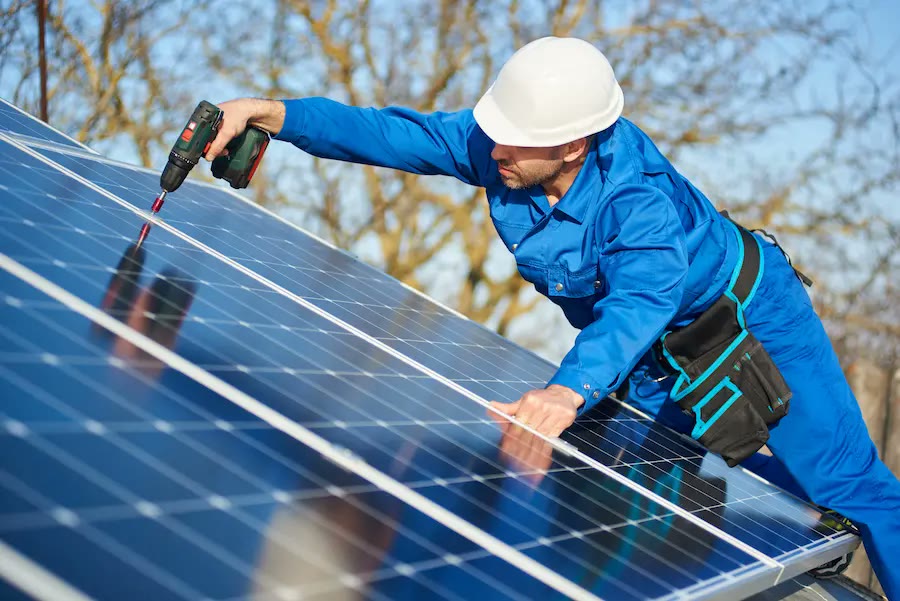
Already have solar? Add a battery.
If you already have panels, a battery lets you keep more of what they generate instead of sending it to the grid. We look at what you have before recommending anything.
What we assess
- Your existing solar panels and array
- Your inverter and how the system is wired
- How your household uses electricity
- Where a battery can be installed
Not every existing system is automatically compatible, so we assess yours first.
Ask about adding a batterySized to your home
The biggest battery isn’t automatically the best battery.
More capacity costs more, and a bigger battery isn’t always the better fit. We design around your home, not around the largest unit.
How much electricity you use
Your overall consumption is the starting point.
When you use it
Morning and evening use looks very different from daytime use.
Your solar generation
Existing or planned panels change how much there is to store.
Your tariff
A time-of-use or export tariff can change how the battery should be used.
EVs, heat pumps and big loads
Higher-demand equipment can change what you need.
The system itself
Your inverter, wiring and available space shape what can be installed.
Make your electricity tariff work harder.
A smart tariff charges different rates at different times. A battery lets you shift when you buy, and when you use.
01
Buy
Charge during cheaper off-peak periods, if you’re on a suitable time-of-use tariff.
02
Store
Keep that electricity in the battery until it’s useful.
03
Use
Power your home from the battery in more expensive periods, so you buy less from the grid.
04
Export
Where your tariff allows
Where your system and tariff support it, surplus stored or generated electricity may be exported.
Tariffs, rates and export terms vary by supplier and change over time. Savings and export income aren’t guaranteed.
Ask whether your tariff suits a battery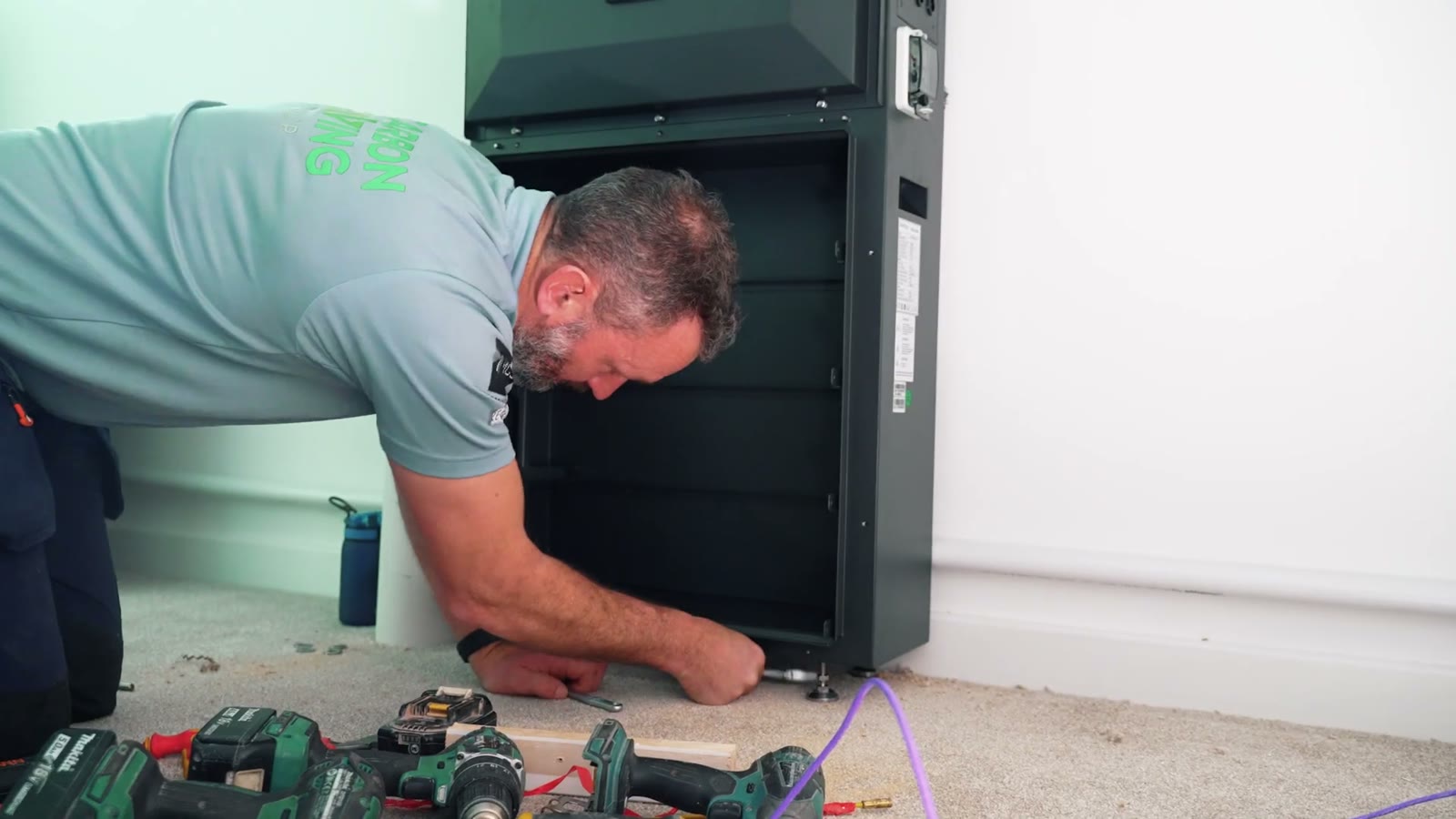
Surveyed, designed, installed and supported by one team.
What you get when Carbon Saving Group fits your battery.
- Surveyed
Your usage and your system
We look at how your household uses electricity and, if you have solar, at your existing system.
- Designed
Sized to your home
The battery is chosen to suit how you use power, not simply the largest one available.
- Installed
By our engineers
Our engineers handle the installation. We are MCS, NAPIT, TrustMark and RECC certified.
- Established
Trading since 2015
A South West company with branches in Plymouth and Salisbury.
- Supported
After installation
We offer servicing and repairs once your system is running.
Common questions
Yes. A battery can charge from the grid on a suitable time-of-use tariff, when electricity is cheaper, and supply your home when it costs more. Whether that makes sense depends on your tariff and how you use electricity, which we look at with you.
Often, yes. We assess your existing panels, inverter and household usage to work out what storage upgrade suits you. Not every system is automatically compatible, so we check yours before recommending anything.
It depends on how much electricity you use, when you use it, and whether you have or are planning solar. A bigger battery isn’t automatically better, so we size it around your home at survey.
If you’re on a suitable time-of-use tariff and your battery and inverter are set up to charge from the grid, yes. Tariffs, rates and times vary by supplier and can change.
On a compatible system and tariff, surplus electricity can be exported, and you may be paid for it under an export tariff. Rates and terms vary, and income isn’t guaranteed.
Not automatically. Many home batteries are not set up to provide backup power. Whether yours can depends on the battery, the inverter and how the system is installed, so ask us if backup matters to you.
Home batteries are designed to last for many years, but lifespan and warranty terms depend on the battery you choose and how it’s used. We’ll explain the details for the model we recommend.
Talk to our team about your project.
- 01
Talk to an advisor
Request a callback and one of our advisors will talk through battery storage for your home.
- 02
Survey of your usage and system
We look at how you use electricity and at any existing solar panels and inverter.
- 03
Your proposal
A full proposal with the recommended battery and design, including compatibility with your system.
- 04
Installation and support
We install at a date that suits you, and offer servicing and repairs afterwards.
Prefer to call?
0800 772 3572Or 01752 936 247, Monday to Friday 08:00 to 18:00, Saturday 08:00 to 16:00.